The Lowest-Friction Funnel Possible: Ad to Email to Newsletter

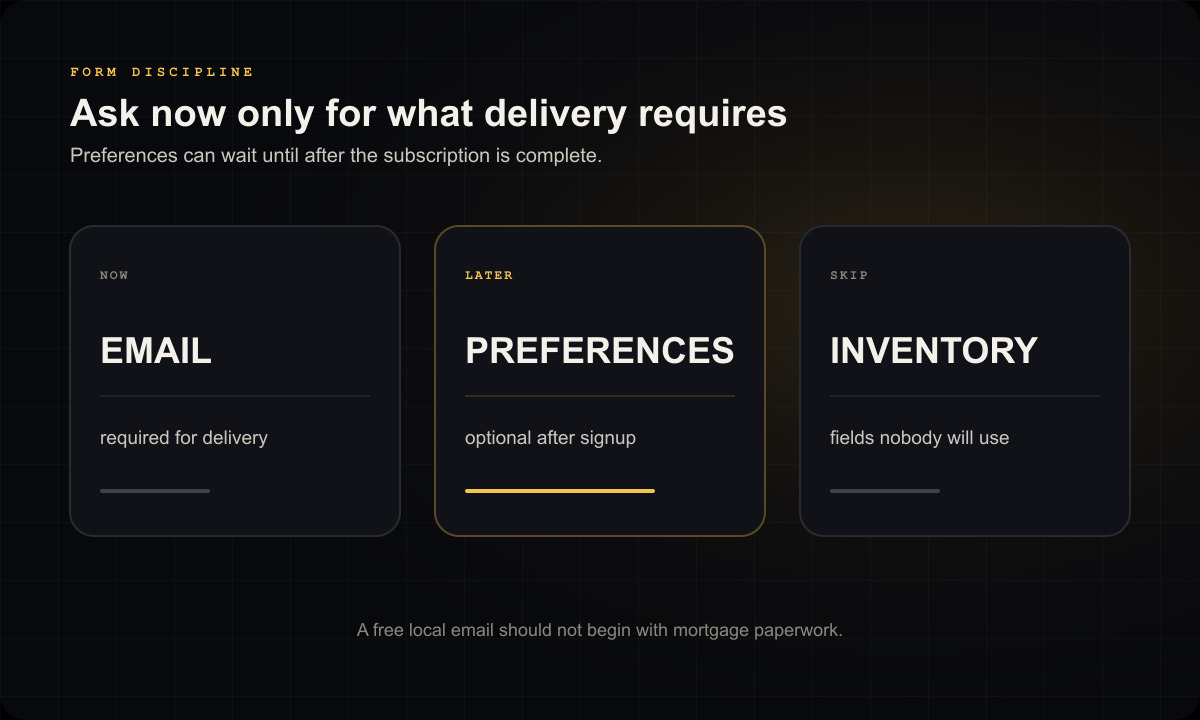
A free local newsletter usually needs one required signup field: email. Ask for the information required to deliver the product, then collect optional preferences after the subscription is complete.
The ad promised a shortcut. Do not follow it with paperwork.
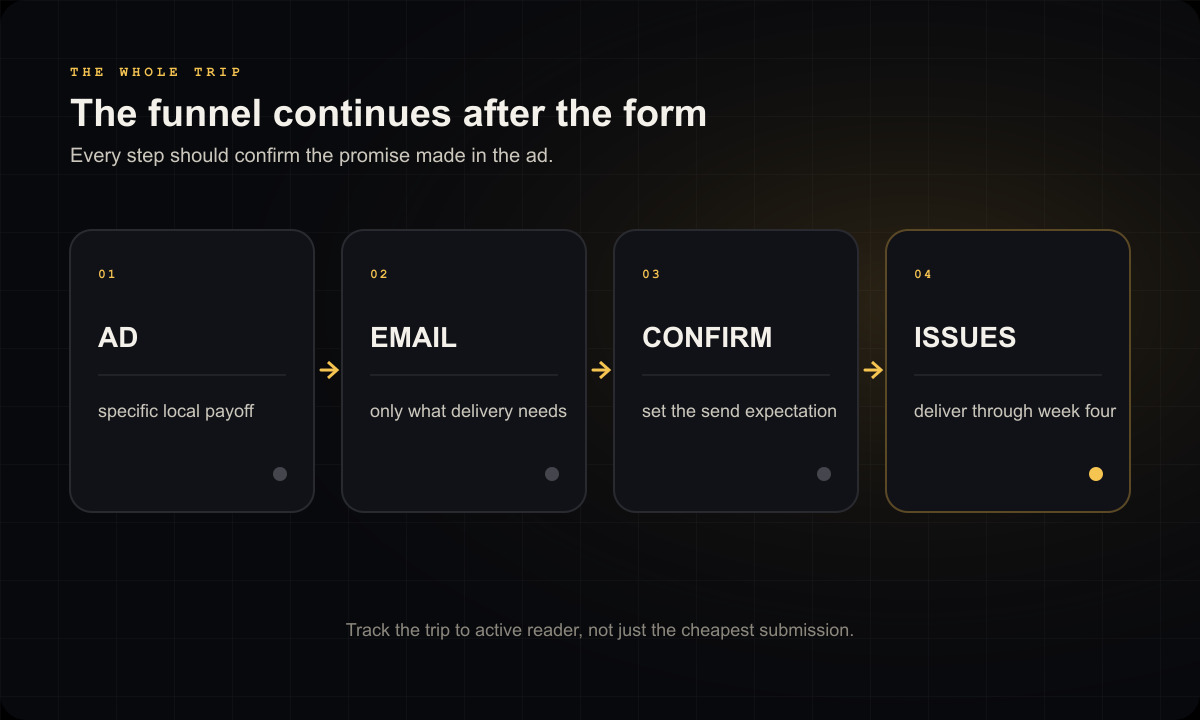
The reader's whole trip should make sense
Someone sees an ad promising five useful weekend picks every Thursday. They tap, enter an email address, see when the first issue arrives, receive one useful item in the welcome note, and get Thursday's issue.
That is the funnel. Every added step needs a specific job.
The LocalTrophy growth guide recommends one page, one clear promise, and one email field. It also makes diagnosis easier. When the page has one job, you can tell whether the promise or the form lost the reader.
Pick the form by the result you need
A Meta Instant Form keeps the signup inside the platform and can prefill contact details. That makes a fast test possible. A landing page adds a click but gives you room for a sample issue and more control over the explanation.
Neither is automatically better. Compare confirmed active readers.
Imagine the Meta form produces 100 submissions, 40 confirmations, and 20 people who open or click during the first four issues. The landing page produces 60 submissions, 50 confirmations, and 35 active readers. Those figures are only an example, but the lesson matters: the cheapest raw lead did not produce the cheapest active reader.
Use the in-platform form when speed and low friction matter. Use the page when the sample helps someone make an intentional choice. Test both when volume supports it.
Required means the newsletter cannot work without it
Email qualifies. First name may help personalization but is rarely necessary. ZIP code may matter for a publication spanning several different areas. A town-specific campaign already provides some geographic context.
Phone number and job title may be useful to your future sales plan. That is not the reader's problem at signup.
For every required field, write: "We cannot deliver the promised newsletter without this because..." If the sentence collapses, remove the field.
The LocalTrophy platform guide can help you choose software with simple forms, welcome flows, and list export. Do not select a platform because its form builder offers the greatest number of questions.
Ask optional questions after the yes
The thank-you page can offer a short survey. Make it clear that the subscription is complete and the survey is optional.
Ask only questions that will change the work:
Which part of town matters most?
What do you want help finding each week?
How long have you lived here?
Are you connected to a local business?
The first can shape coverage. The second can shape sections. The third helps distinguish new-resident needs. The fourth can surface partnership or sponsor conversations.
If nobody owns a decision connected to the answer, do not collect it. A spreadsheet full of unexamined preferences is not reader research.
Deliver value in the welcome email
Confirm what the person joined, say which day it arrives, and give them one useful local item now. Invite a reply with one simple question if you want qualitative feedback.
Do not use the welcome email for a founder biography, referral campaign, sponsor pitch, and platform tour. The reader should recognize the product they requested.
If you use double opt-in, make the confirmation step obvious. Watch the gap between form submissions and confirmed subscriptions. A large drop can point to confusing copy, delays, or deliverability trouble.
Keep the compliance basics boring and working
For U.S. commercial email, FTC guidance requires accurate sender information and subject lines, a valid postal address, and a clear opt-out method. Honor opt-out requests and check the rules that apply to your audience and location.
Use a newsletter platform that manages unsubscribes and suppression. A side spreadsheet named "do not email" is how somebody eventually gets emailed.
The LocalTrophy start guide covers the rest of the setup. This article is not legal advice; it is a request not to improvise consent and opt-outs because the funnel looked cleaner without them.
Find the leak, then change one thing
Track enough of the path to locate trouble: click, form submission, confirmation, welcome-email activity, first-issue activity, and four-issue retention.
Clicks without submissions point toward the promise or form. Submissions without confirmations point toward the confirmation step. Confirmed readers who ignore the first issue point toward a mismatch between acquisition and editorial product.
Reduce friction that blocks the intended action. Keep friction that protects consent or filters accidental taps. Cheapest is useful only when it buys the audience you meant to serve.
If you want the funnel to lead into a consistent newsletter without taking on weekly production, LocalTrophy can source, write, and edit the issue in your voice.
FAQ
What fields should a newsletter signup form have?
Start with email. Add a required field only when delivery or essential segmentation genuinely depends on it.
Are Meta Instant Forms good for newsletters?
They can speed up testing and reduce typing. Measure confirmation and first-issue activity because low-friction forms can also capture casual interest.
When should I survey subscribers?
Offer a short optional survey on the thank-you page or in the welcome email. Ask only questions linked to a decision you plan to make.