The 16-Second Ad That Can Launch a Local Media Company
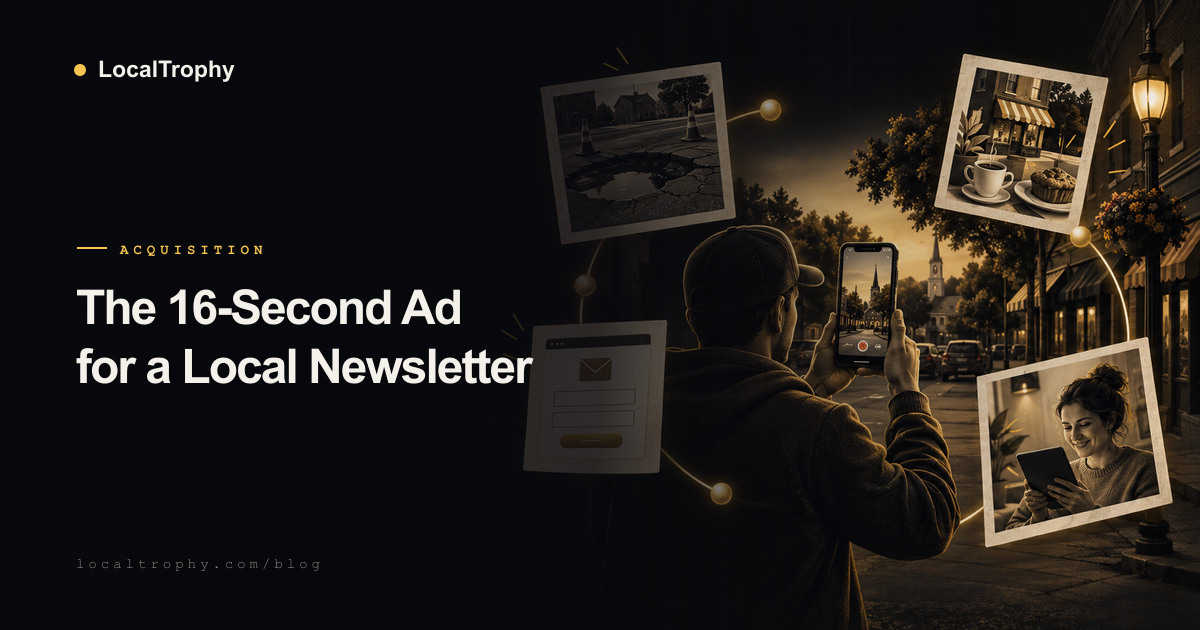
You can test a local newsletter with a phone and a 16-second video. The constraint forces you to name the local problem, show the recurring payoff, and ask for one action before the viewer finishes deciding whether you sound tedious.
Sixteen seconds is a writing constraint, not a proven optimum. The useful part is how little room it leaves for fog.
Fix the generic hook first
"Stay connected with everything happening in your community" could sell a chamber email, a condo notice, or an app last updated in 2023.
Start with a frustration the intended reader recognizes:
St. Pete announces the good weekend stuff after you already made worse plans.
Then make the payoff tangible:
Every Thursday, get five picks worth leaving the house for, with prices, parking, and the detail the event flyer forgot.
That is stronger because it describes the editorial job. Replace the place and reader, then make sure the line still reflects the issue you can produce every week.
The LocalTrophy start guide helps narrow that promise. Do it before filming. Video rarely improves a sentence that means nothing.
The 16-second scaffold
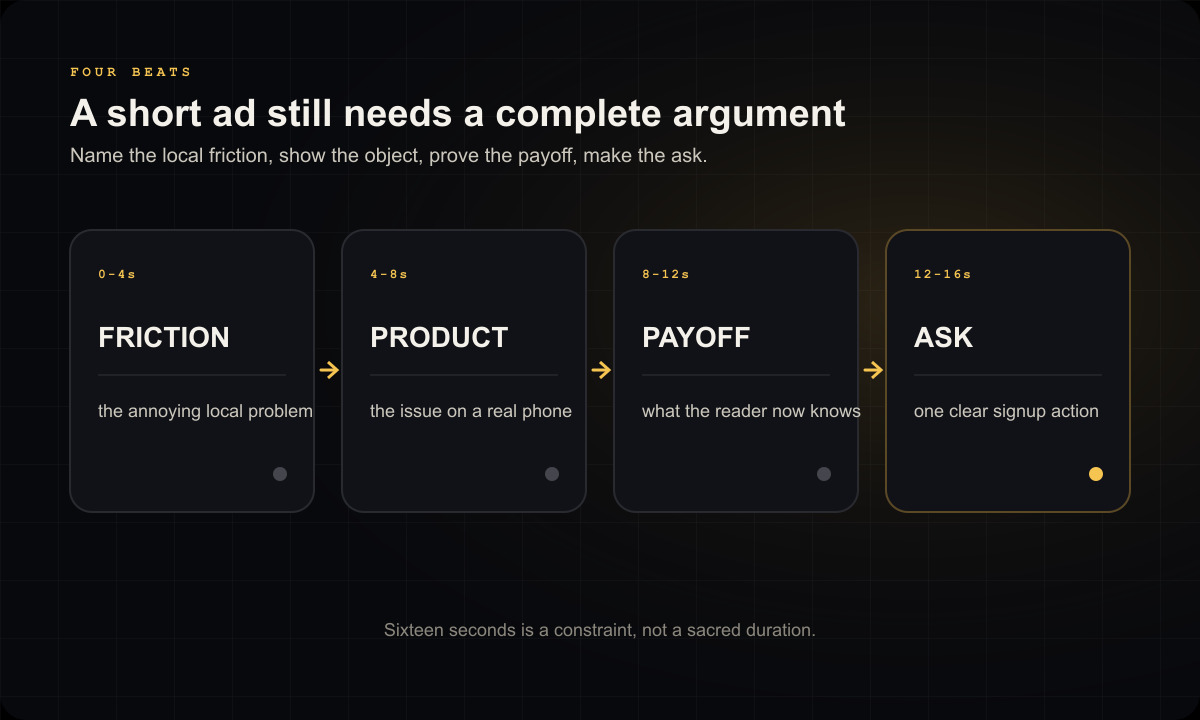
Use the timing as a rough editing tool:
First four seconds: name one recognizable local frustration.
Next seven seconds: promise the newsletter and show two real examples.
Final five seconds: say it is free and ask for the email.
A complete version might sound like this:
St. Pete announces the good weekend stuff after you made other plans. Every Thursday, we send five picks worth leaving the house for, with prices and parking. It is free. Tap below and get this week's list.
Record it aloud. If it takes 25 seconds, remove setup before removing the useful detail. If it takes 11, resist filling the gap with "community" and "curated."
Make the sample visible
Film near a recognizable, quiet local background. Use daylight, put the phone at eye level, and record three takes. Add captions so the promise works without audio.
Show a quick screenshot of the sample issue or two images from items you can verify and legally use. Another sweeping skyline tells viewers which city you targeted. It does not tell them what the email does.
The LocalTrophy newsletter-ideas guide can help turn a broad city publication into a promise you can demonstrate.
Do not hire actors, rent lights, or animate a logo before the first test. If the rough ad finds the right readers, better production may help. If it finds nobody, you saved a surprising amount of money on transitions.
Keep the form as short as the ad
Send the click to a one-field page or a Meta Instant Form. Ask for the email address needed to deliver the newsletter. Tell the person what arrives and which day.
Do not add phone, job title, birthday, household size, and an essay about local interests. You just promised a shortcut. The form should not immediately withdraw it.
Send a welcome note right away and deliver the next issue when promised. The ad acquires a lead. The first issue decides whether that lead becomes a reader.
Cheap leads can be the bad result
Run two or three hooks while keeping geography, budget, form, and delivery consistent enough to compare. One might focus on weekend planning, another on openings, and another on local changes that affect the workweek.
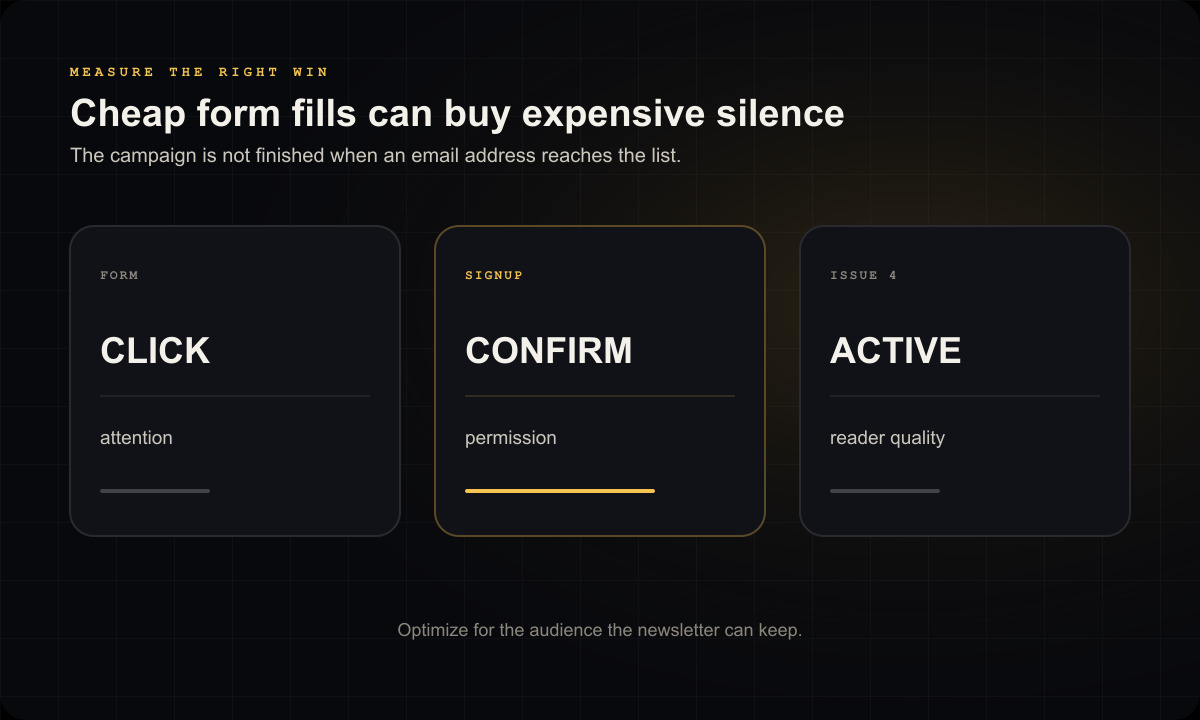
Tag every subscriber by ad. After four issues, compare confirmation, activity, unsubscribes, replies, and forwards. Do not crown the ad with the lowest form-fill cost.
Imagine one version produces subscribers at $1.10, but only 40% confirm and 20% show activity. Another costs $2.20, with 75% confirmation and 50% activity. The second can have the lower cost per active reader despite looking worse in the first report.
That is the trap with prefilled forms. Easy submission removes useful friction, but it can also capture people whose interest lasted one thumb tap. Judge the ad after the newsletter has had a chance to keep them.
The LocalTrophy article on zombie newsletters uses a city-swap test for editorial copy. Run it on the ad. A city name and skyline do not rescue a promise that could belong anywhere.
Improve production after the promise wins
Once one hook repeatedly attracts retained readers, improve the audio, shoot local B-roll, test reader quotes, and make variants around the same promise. Keep the phone version as a control.
The nicer ad should beat it on active-reader cost. Looking more like a campaign is not the result.
If you want to test acquisition without also inventing a newsletter every week, LocalTrophy can handle the sourcing, writing, and editing while you focus on the audience.
FAQ
Does the ad have to be exactly 16 seconds?
No. Use the limit to force a clear message. A strong 12-second or 25-second ad can work. Compare retained-reader cost.
Should I use a Meta form or landing page?
Use the Meta form for a fast, low-friction test. Use a landing page when the sample needs more room. If you test both, compare confirmed active readers rather than raw leads.
What should the ad say?
Name one local frustration, promise one recurring outcome, show a specific example, and ask for the email. Cut language that could advertise any town.