Your First Sponsors May Already Be on Your Email List

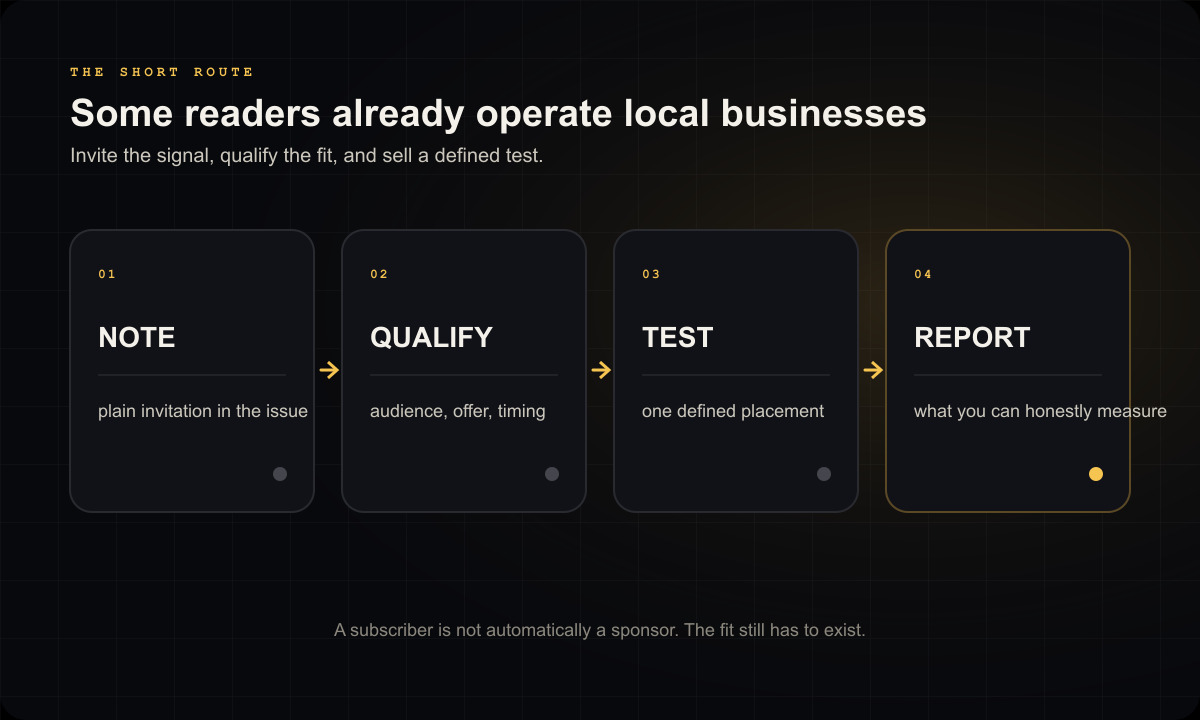
Your list may already include local business owners, marketing managers, and people who can introduce you to both. A short note can surface them. It should start a conversation, not turn the newsletter into a rate card with an events section attached.
Ask after the product exists
You do not need 10,000 subscribers. You do need a consistent issue, an identifiable audience, and engagement you can describe without interpretive dance.
Prepare total subscribers, typical estimated active readers, send frequency, and a plain description of the reader. Add two examples of what readers used or replied to. Do not infer a detailed demographic profile from a handful of survey responses.
The LocalTrophy sponsor guide covers outbound prospecting. This tactic begins inside the audience, where some commercial relationships may already exist.
Send one plain note
Place it after the editorial content:
Own or market a local business? We are opening two sponsor spots next month for businesses that want to reach people who live in and care about Cedar Rapids. Reply with what you sell and who you need to reach. If the fit is real, we will send details.
Use a real number of available placements. Do not manufacture scarcity because two sounds better than "we have never sold one."
The reply asks the reader to identify their business and audience. That small action is more useful than sending a full media kit to everyone.
Qualify before quoting
Ask what the business sells, which local customer matters, what action the reader should take, whether timing matters, and how the business would recognize a useful result.
Imagine a landscaping company replies to a newsletter aimed at downtown apartment renters. The geography fits, but the customer may not. Do not force the deal because both parties can name the same city.
A family restaurant promoting a weekday offer may fit better. Even then, inspect the offer and landing experience. The newsletter can deliver attention. It cannot repair a confusing coupon or reservation page.
Sell a small, defined test
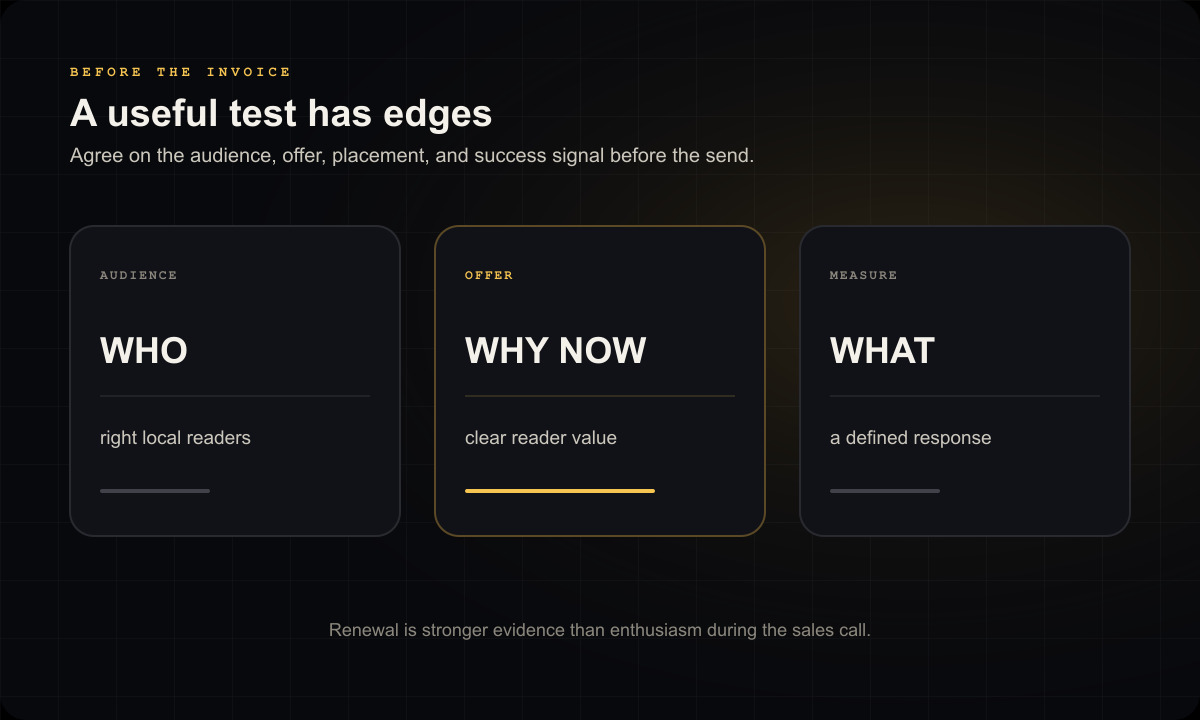
Start with one placement or a short package. Specify position, length, image, link, send date, category exclusivity, approval deadline, and post-send reporting.
Price from active readership, audience fit, and work required. The LocalTrophy revenue guide gives planning ranges across list sizes, but your collected price and renewal record matter more.
Promise what you control: the placement, audience, date, and report. Do not promise sales. If the sponsor has a trackable offer, code, landing page, or reply path, agree on how both sides will read the result before the send.
Mark paid work clearly
Label the sponsor block. Keep it visually and editorially distinct from recommendations.
Readers should not have to guess whether a glowing paragraph was selected or purchased. Clear labeling also lets the advertiser make a direct offer instead of wearing a fake editorial mustache.
For U.S. commercial email, FTC guidance includes accurate sender information, a non-deceptive subject, a valid postal address, and a clear opt-out. The ordinary unsubscribe path must keep working when sponsors appear.
The LocalTrophy monetization guide covers other revenue models. Sponsorship is often the easiest first layer because local businesses already understand the arrangement.
Report, ask, recommend
After the placement, send the agreed newsletter metrics and ask what happened on the sponsor's side. Calls and walk-ins can be hard to attribute. Say when the evidence is uncertain.
Recommend the next step based on what you know: repeat, change the offer, change timing, or stop. A renewal should follow a useful result or a sensible next test, not an automatic congratulations email.
Record category, contact, goal, placement, price, reported result, and renewal. Those first conversations will teach you which categories value the audience and which messages readers use.
Ask for the right introduction
When a reader's business is a poor fit, close the conversation cleanly. Then ask whether they know a business that needs the audience you described.
Some markets have tightly connected owner networks; others do not. A specific introduction request gives the tactic a chance without assuming every town conducts business at the same breakfast table.
If you want a reliable editorial product to sell against without becoming its weekly editor, LocalTrophy can source, write, and edit the newsletter while you own sponsor relationships.
FAQ
How large should my list be before seeking sponsors?
There is no fixed minimum. You need a clear audience, consistent sends, honest engagement data, and enough reach to make a small test worthwhile.
What should I charge the first sponsor?
Use active readership, fit, placement, creative work, and duration. Start with a defined test instead of a large package unsupported by results.
Can I ask all readers whether they own a business?
Yes, in a brief relevant note. Keep editorial content primary, label later paid placements, and preserve the normal commercial-email disclosures and opt-out.